
We’re Reaching Beyond Talent Identification
From identifying talent to understanding how it evolves…on and off the pitch.
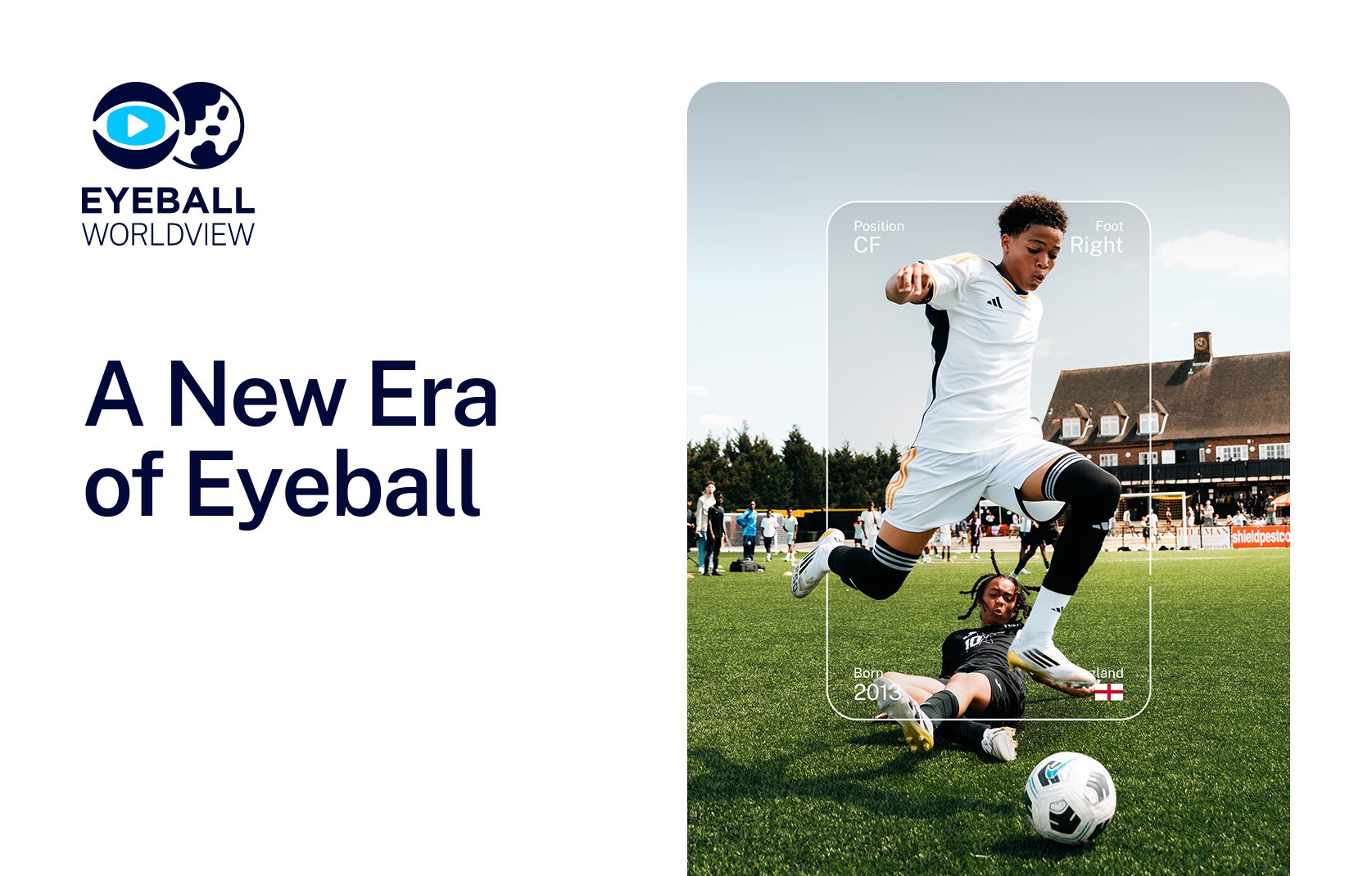
Is “Talent Identification” Even Real?
We started Eyeball by bringing senior scouting processes into youth football. The first step was to secure a reliable supply of match video from the amateur game. Naturally, the next challenge was to extract event data from that match video.
Early on, clubs framed us simply: “Wyscout for kids.” The comparison helped people position us in the market, but we were on a different, more ambitious mission.
Since then, we have worked with partners across the Premier League, Ligue 1, Serie A, Bundesliga, LaLiga, MLS, QSL, and the Saudi Pro League, helping them streamline both their local and international youth scouting.
Currently, we have 3,000+ amateur clubs and academies across three continents partnering with us, filming their games and supplying the players we profile.
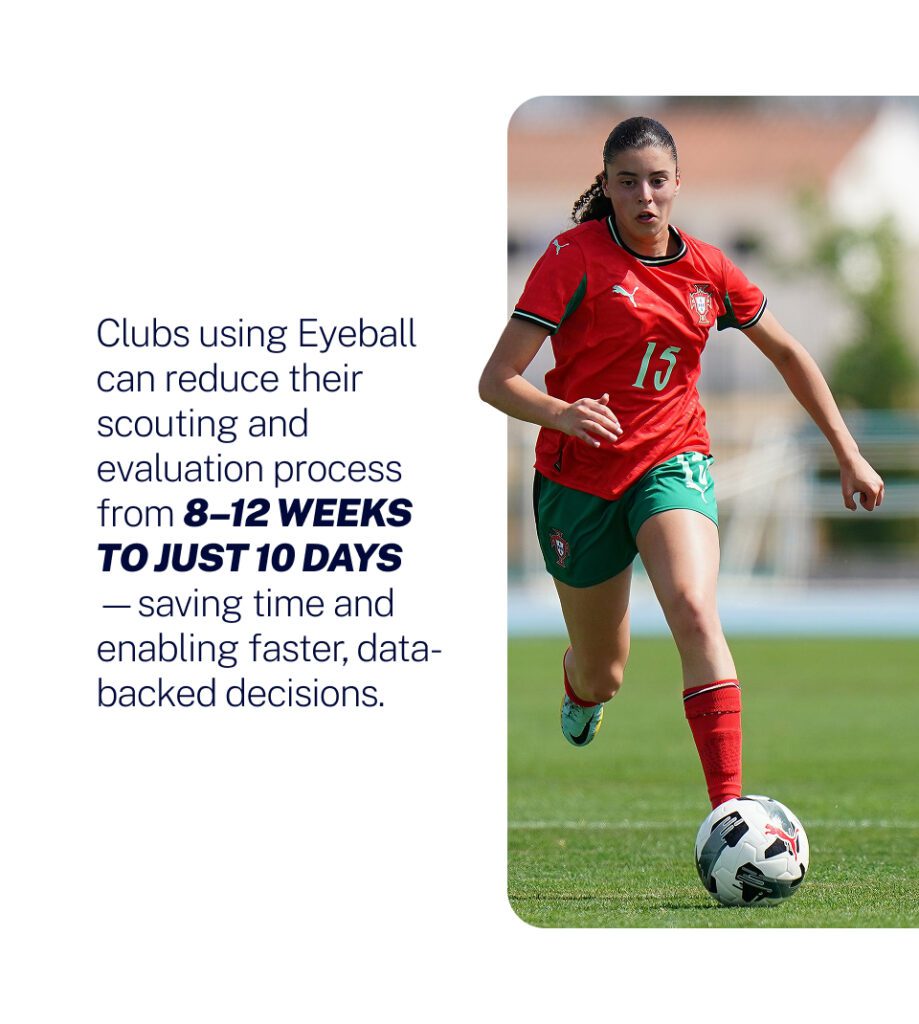
Today, a significant share of youth scouting reports are backed by Eyeball video and data. Each year, hundreds of young players move into professional environments after being profiled on the platform.
That progress could be viewed as a success. But we’re not done. Youth scouting is not the same problem as senior recruitment.
Zoom In On Player Development
Ask a hundred scouts to define “talent identification,” and you’ll get a hundred different answers. But there is a common factor, and it’s exposed in the data.
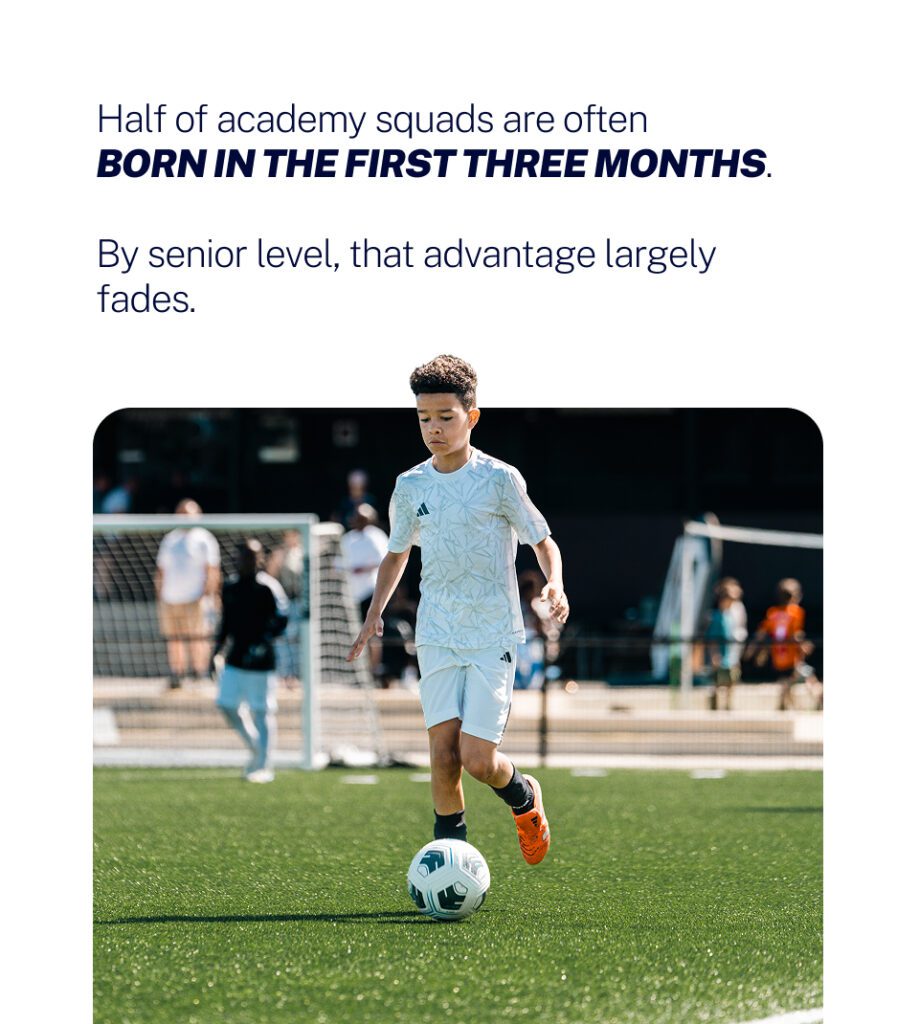
Across European academies, there’s a clear bias toward players born early in the year. The phenomenon of the “Relative Age Effect” is a continuing issue in elite youth football. What we often label as talent is simply physical advantage.
Sitting alongside this is another reality: early bloomers are prioritized — but late developers often become the better players.
We believe that “Visibility Creates Opportunity.” The challenge is that visibility isn’t just about being seen, it’s about being understood. Rather than what a player is now, youth scouting is about what they can become.
In youth scouting, identifying talent is only the first step. The real question is: how far can this player develop — and in what environment?
There’s a lot of subjectivity in that process. Progressive clubs try to assess attitude, character, and background. But the evidence suggests that evaluations are still heavily biased or subconsciously influenced by the apparent talent on display.
Talent doesn’t grow in a straight line.
What a player shows at 12 is a poor predictor of what they become. We need a better means of measuring and tracking talent if we dare to enter the prediction game.
Beyond the Pitch
Data has moved to the front and center of player recruitment. And while it’s a sophisticated approach, a player is more than just data points or match clips. Data plays a role — but it’s a starting point, not the answer.
That’s why Eyeball is moving beyond the pitch and building player profiles that account for multiple variables over time.
Character, personality, cognitive ability, emotional intelligence, mental health, physical development, and environment — all shape how a player learns and performs.
These human factors underpin decision-making, anticipation, resilience, and tactical awareness. But how do you make that complexity tangible? How do you quantify it and compare it to the broader cohort? This is the challenge Eyeball accepts.
Because what we see on the pitch is only part of the story.
Wisdom Backed By Science
Youth scouting and coaching are disciplines that require a deep understanding of player development.
As Eyeball builds more extensive and nuanced player profiles, new opportunities open up across the youth football ecosystem. Beyond scouts and recruiters, coaches, players, and their parents all benefit from better data.
Coaches can design more effective, individualized training. Players gain more ownership over their development. Parents and mentors gain clarity on the journey.
Historically, youth scouting and player development have relied on instinct, colored by years of experience. The kind of gut feeling that makes coaches or scouts say: “I see something special in this kid.”
This ability can’t be replicated, precisely because it operates on a human level. Our aim is to build data that supports — not replaces — human judgment.
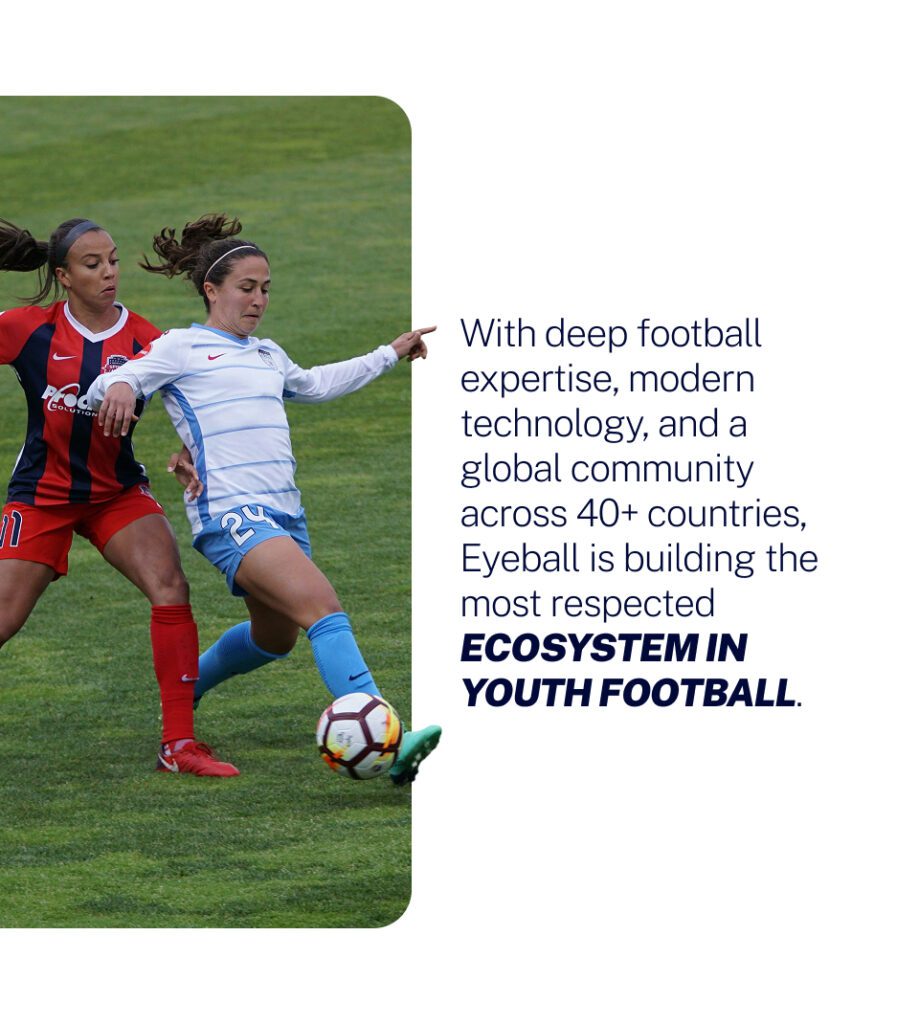
Built For Many
Leading AI commentators warn of a wave set to replace key human skillsets. And while rapid advances are reshaping parts of football, the knowledge, wisdom, and instinct of an expert coach or scout cannot be manufactured.
But it can be enhanced.
Blending that instinct with deeper, data-driven insight gives the entire youth football ecosystem a clearer view of player development and potential — and better visibility across a player’s journey.
As AI continues to advance, Eyeball aims to contribute positively to the game by opening more opportunities for young players, wherever they live and play.
And maybe — just maybe — there will always be something about talent that can’t be fully explained.
For scouts tracking prospects and pushing beyond talent ID.
For coaches developing players through more individualized approaches.
For federations supporting development at every level.
For players and parents taking ownership of the journey.
Eyeball is built for the many, not just the few.