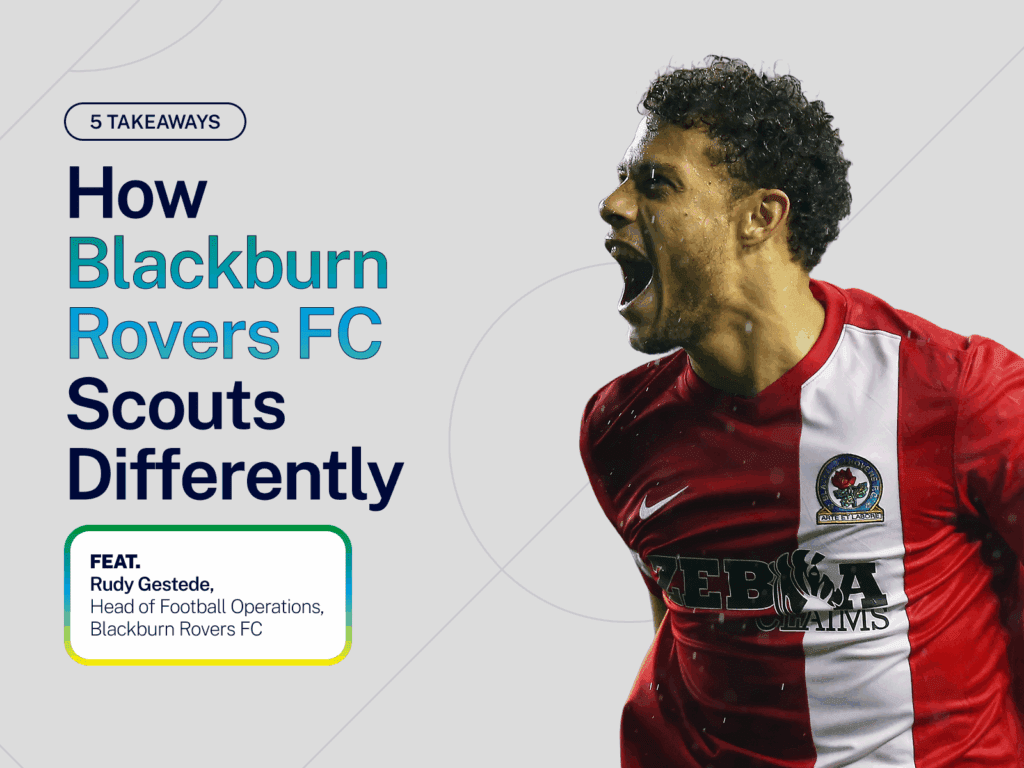
Rudy Gestede spent the better part of a decade as a professional striker — Metz, Cardiff, Aston Villa, Middlesbrough, and further afield. He knows what it takes to develop through an academy system. That experience now sits at the center of his work as Head of Football Operations at Blackburn Rovers FC, where he oversees recruitment across the club, including the Academy.
We sat down with Rudy to talk about how scouting has changed, what technology actually does for clubs at the Academy level, and what he still looks for first when watching a young player. What came out of the conversation was sharper than most of what you read about football technology.
Here are five takeaways from the interview.
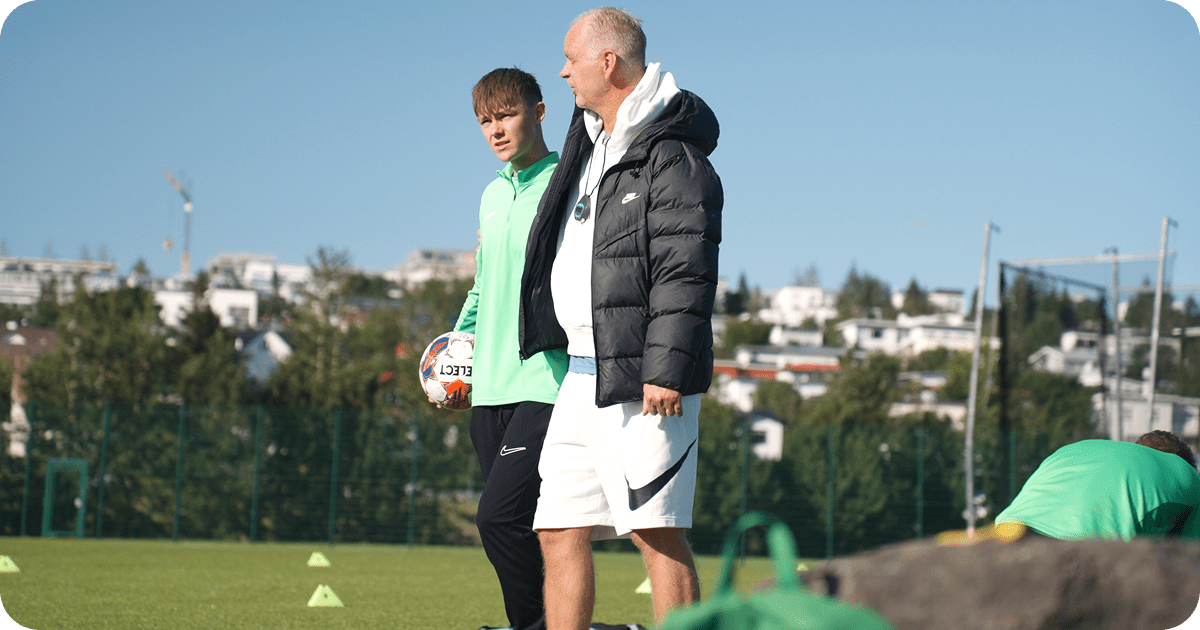
At the first-team level, recruitment tends to be transactional. A player either fits what you need or they don’t. The emotional stakes are lower because the relationship between club and player is shorter.
The academy is different. Coaches spend years with the same players. They watch them grow up, struggle, develop, plateau, break through. That investment is genuine and often valuable. But it also means that when it comes time to make a decision on a player, whether to keep them, release them, or recommend them to a club higher up the ladder, the evaluation is rarely clean. Opinions have been forming for years. History gets in the way of evidence.
Rudy put it plainly.
Joachim Winther: Do you think technology has made scouting more fair and accessible for young players — or is it a positive or a negative in your thoughts?
Rudy Gestede: I think it’s a positive, because the information that we have now — based on all those tools available in the market to recruit players — takes your bias on the players out. Before, you used to ask coaches, what do you think of him? And then it became very personal. Especially with Academy players, when there is more emotion than the first-team environment, because they’ve seen the player growing up from 9 years old to 16, 17 years old. So now, with all the tools that we have, we are able to have a clear picture — a factual picture — on the players. Then the information from the coaches, from the scouts, just gives more information. But then you take the bias — emotional bias, confirmation bias — out of the decision-making process.
The distinction between emotional bias and confirmation bias is worth holding onto.
Emotional bias is what happens when a coach likes a player too much to see the flaws clearly. Confirmation bias is what happens when a club has already decided a player is good, and only notices the evidence that confirms it. Structured data and video give clubs a way to look at a player before those opinions have fully formed or to test them against something objective once they have.

The narrative around youth development tends to run in one direction: standards are higher than they used to be, players need to be more complete earlier, the window to get signed is narrowing. There is truth in that. But Rudy added a counterpoint that doesn’t come up as often.
Joachim Winther: Do you feel the demands on young players today are higher compared to when you were coming through back in the day?
Rudy Gestede: Everything has changed, you know, nowadays. But one thing I would say also is more kids are ready sooner than before, but we still push too much sometimes on the young players. We have to find the right balance, because if we want those assets — the young players — to be at their best when they start to play with the first team, we need to surround them. We need players going to guide them on the pitch to be the best player they can be.
This is the tension that runs through a lot of modern academy work. The tools available to clubs now make it easier to track, evaluate, and identify players at younger and younger ages. That’s genuinely useful. But it can also create pressure to make decisions too early: to fast-track players who are physically advanced before they’re emotionally or technically ready, or to discard players who are late developers before they’ve had the chance to develop.
The goal of better information isn’t to speed up the pipeline. It’s to make better decisions at every point along it.

For most of the history of football scouting, the work was physical. You went to games. You travelled. You built networks of contacts in different leagues and countries who could give you a tip or a recommendation. The information you collected was largely in your head or in a notebook.
That world hasn’t disappeared. Live scouting still matters. Local knowledge still matters. But the baseline has shifted significantly.
Joachim Winther: How has youth scouting changed during your career — both as a player, but now working inside the club as well?
Rudy Gestede: Now we’ve got the chance — like with Eyeball, for example — to have access to more information, more videos on players. Especially at this young age where before, you had no video information, even no prioritization at training — information on training, what was the workload on a weekly basis. Because it was just off the cuff. No real plan or nothing. So now everything is registered, you can get access to it. If I want to see a player at 15 to 17 years old playing in this academy or this club, I’ve got access to it. The scouts are more deployed on the ground to give us feedback on this. So information is important, especially at this young age. We’ve got also the physical follow-up, mental follow-up on the players. So it’s much easier for us to have the right information on the young player.
The phrase “off the cuff” captures something important about how structured the process wasn’t. Physical workload, training data, match footage. These things existed in fragments at best.
What clubs now have access to is a more complete picture of a player across time. Not just what they did in one game, but how they’ve been used, how they’ve developed, and whether the environment they’re in is the right one for them.

For a Championship club with serious Academy ambitions, the talent pool has expanded significantly over the past decade. Players from Africa, South America, and emerging football markets are increasingly part of the conversation at clubs across Europe. But expanded geography creates a practical problem: how do you build a reliable picture of a player who isn’t playing in a league you have contacts in, in a country you may never have visited?
Joachim Winther: When we first came to you and pitched Eyeball, what made you think: we really need this in our club?
Rudy Gestede: It’s just the information on young players — the video, the access to the video — because that’s something hard to get. And also, you’re not just on one continent. You’re all around the world now. So for us, having access to those top young players in Africa, in South America, or in some countries in Europe — it’s even harder to have that information. So when we build our profile on a player — how many games did they play, how many injuries, blah blah blah — we’ve got all the information. Then because of Eyeball, we’ve got all the video support needed to back that up. So it gives us a fantastic tool to add into our process for recruiting young players.
The profile-building process Rudy describes is standard at the first-team level for any club operating at scale. Making that same process available at the Academy level, and across geographies that were previously difficult to access, is where the practical value lies. It doesn’t guarantee a player will be spotted or signed. But it means the decision to pursue or pass on a player is based on more than a contact’s word or a highlight clip.
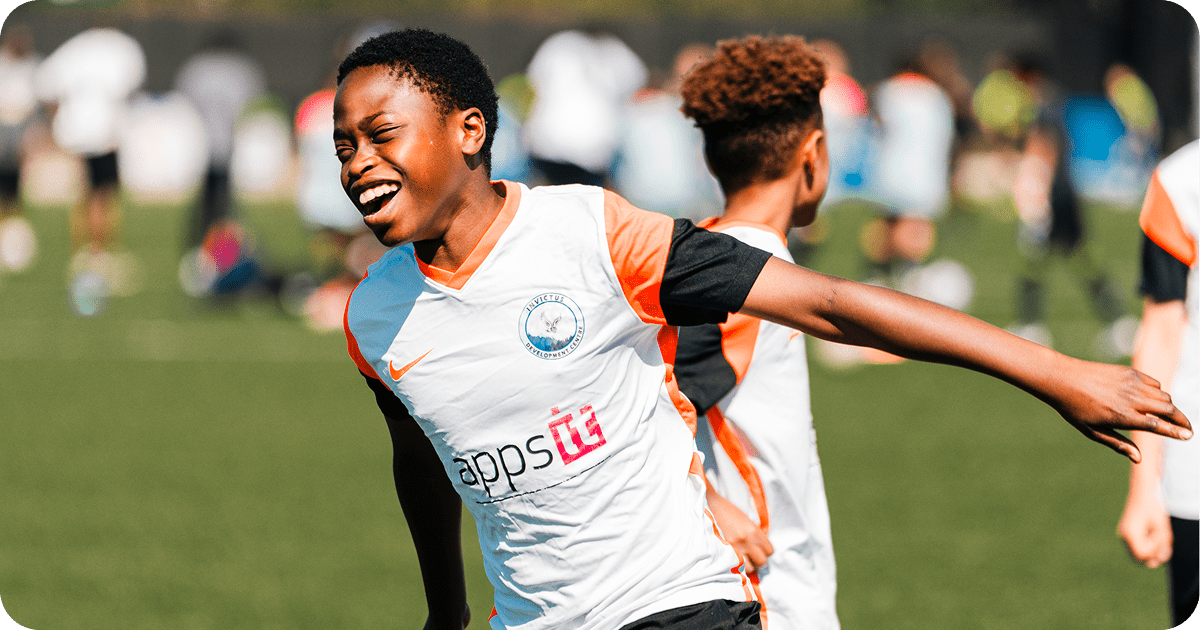
For all the talk about information, tools, and structured evaluation, Rudy’s answer to the most human question in the interview was the sharpest of the lot.
Joachim Winther: Which qualities in a young player make you smile when you see them?
Rudy Gestede: Football is football. So when you see someone with a different touch — talents, technical abilities with the ball — you say, OK, there’s something there. How can we help him improve and physically develop to make sure he can cope with the physicality? But his talent will be there. So a football player is a football player. We talk a lot about data, physical data, blah blah blah. But talent with the ball is just different. If you go to the highest level, they’re all different with the ball. So that first look — it’s the technical abilities. Then obviously when you see someone run past players with the sprint, and they’re agile — you usually see straight away when someone’s got something different as a young player.
It’s a useful corrective. The reason better information and better tools matter is not to reduce player evaluation to a data output. It’s to give the people who know how to watch football a stronger base to work from. The instinct, the moment when a scout or a coach sees something different in a player, doesn’t come from a database. But the context that helps turn that instinct into a good decision does.
Human judgment, backed by better information. Neither one replacing the other.
To watch our full interview with Rudy Gestede, head to our YouTube channel.
Promotional Campaign – All Eyes on You Giveaway
Eyeball may from time to time organize promotional campaigns for its users or the public. One of such campaigns is the “All Eyes on You Giveaway” (the “Giveaway”), which is a time-limited promotional activity organized by Eyeball s.r.o., a company incorporated under the laws of the Czech Republic, with its registered office at Jungmannova 745/24, Nové Město, 110 00 Prague, Czech Republic. For the purpose of this Article, the term “Landing Page” means the official webpage dedicated to the Giveaway as designated by Eyeball, and the term “Prize” means any promotional reward granted by Eyeball under the Giveaway, including but not limited to a smart camera and/or access to Eyeball Discover for a limited period of time.
The Giveaway is free to enter and open worldwide. Participation is voluntary and does not create any legal right or entitlement against Eyeball.
To participate, entrants must submit a valid application using the official entry form available on the Landing Page and accept these Terms & Conditions by ticking the dedicated checkbox. Only complete and valid entries will be considered.
Winners will be selected by random draw conducted by Eyeball at its sole discretion. The number of winners may vary and shall be determined by Eyeball. The outcome of the draw is final and cannot be appealed.
Prizes are awarded at the discretion of Eyeball. Prizes are non-exchangeable, non-transferable and cannot be redeemed for cash or any monetary equivalent. Eyeball reserves the right to substitute any Prize with a similar or equivalent Prize of equal or higher value without prior notice.
Eyeball may disqualify any participant who attempts to manipulate the Giveaway, submits false information, breaches these Terms & Conditions, acts abusively, unlawfully or in bad faith, or compromises the integrity of the Giveaway.
By participating in the Giveaway, participants agree that Eyeball may contact them using the contact details provided in the entry form for the purposes of administering the Giveaway and related Eyeball services. Personal data will be processed exclusively for these purposes and in accordance with the Eyeball Privacy Policy available on the Eyeball website.
Eyeball shall not be held responsible for late, lost, corrupted, misdirected or unsuccessful entries, nor for any technical issues, system failures, interruptions or delays affecting access to the Giveaway.
Eyeball reserves the right to modify, suspend or cancel the Giveaway at any time for operational, technical, legal or other legitimate reasons, without prior notice. Participation in the Giveaway does not create any expectation regarding its continuation or conclusion.
To the maximum extent permitted by applicable law, Eyeball shall not be liable for any direct or indirect loss, damage, injury or expense arising from participation in the Giveaway or acceptance of any Prize, except in cases of gross negligence or wilful misconduct.
The Giveaway is governed by the laws of the Czech Republic. Any disputes arising out of or in connection with the Giveaway shall be submitted to the exclusive jurisdiction of the competent courts of the Czech Republic.
This Article 11 applies exclusively for the duration of the Giveaway, as specified on the Landing Page. After the Giveaway ends, this Article shall automatically cease to apply, even if it remains published in these Terms & Conditions.
Text about the clubs and teams in Mali / selected country Track how your teams are performing, how coaches are communicating, and how engaged your players and parents really are. Bring visibility, alignment, and quality to every level of your club.
Speak to an Eyeball expert and begin discovering new talent
Support & FAQs
Downloads
News & Events
Complete your details below and one of our Eyeball Experts will call you to arrange a time to do a demo